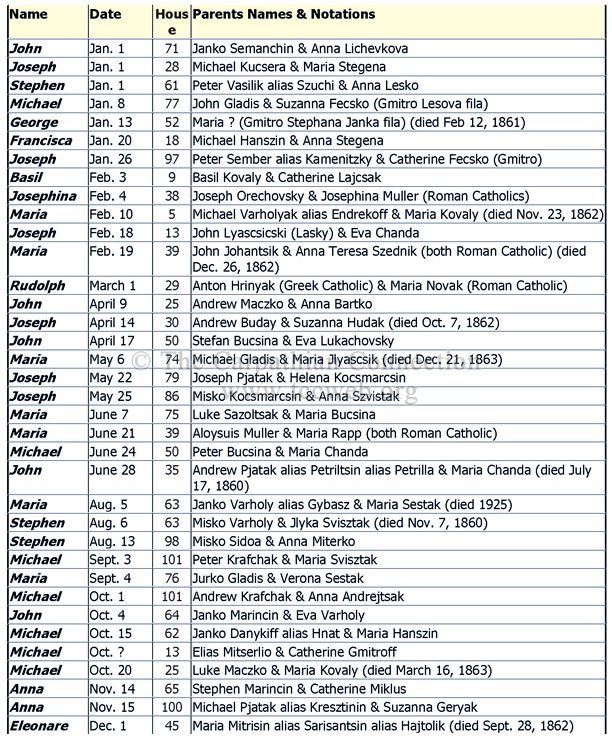
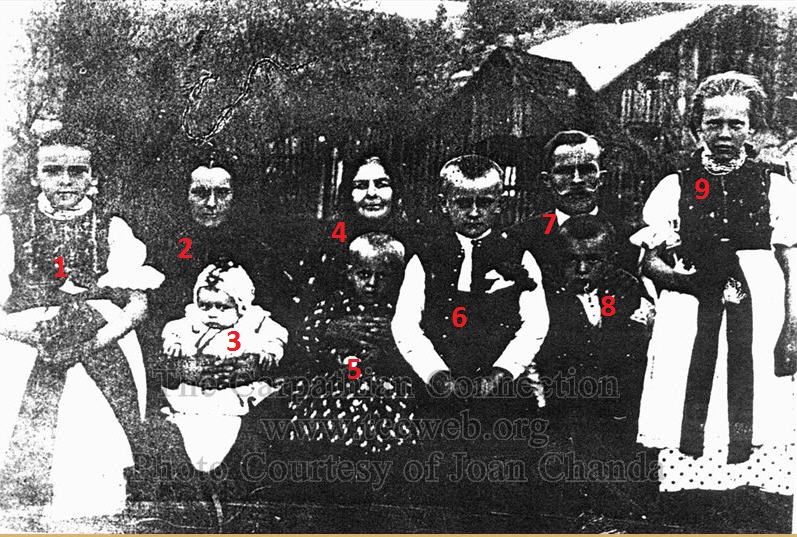
Chris Voag is organizing this fundraiser on behalf of his mother Donna a granddaughter of Michael & Anna Sokol Osifchin, Carpatho-Rusyn immigrants from Udol, Slovakia and Michael and Maria Youpa Chanda from Maly Lipnik, Slovakia.
Genealogical Note Regarding Copying of Family Trees:
Notification: The vast majority of data that appears on various personal online family trees and on familysearch.org's tree pertaining to the Chanda, Lasky, Mudrick, Osifchin, and Youpa families from the village of Maly Lipnik was researched and is the sole work product of Steven M. Osifchin of The Carpathian Connection.
The above referenced research entailed numerous hours during the past 30 plus years of on-site visits to various locations, such as, Family History Centers, National Archives, State and local Municipal Archives, Cemeteries, and personal visits to distant relations within the United States and Eastern Europe.I have deciphered, translated documents and entered data from various documentation which is my personal creation and work product.Over the years I have shared data with the caveat that it was meant for personal use only. However, on many occasions this has been disseminated from one individual to another without credit being granted from the original source.Today, it is rather simple to gather ones family tree data off of the internet without the labor intensive performance of translating documents, making contacts, ordering and expending of monetary payments for vital records,etc. By way of example, if an individual were to write a thesis for college, they most certainly would source this and under no circumstance would appreciate others taking credit for their hard work.Genealogical research is no different in this regard and should have the exact same copyright protection as do all other created works.Please be guided accordingly when considering utilizing data contained herein.
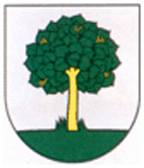
The village of Malý Lipník is mentioned for the first time in a hand-written chronicle in 1715. It belonged to Sharysh Zhupa, afterwards to Staro Luboviansky county of the Priashiv district (until 1960), since 1961 it belongs to Vykhodo Slovensko (Eastern Slovak) county, and since 1968 to Staro Luboviansky county, both of Priashiv district/region. In other historic periods the village carried these names; in 1715 Kis Lipnik, in 1786 Lipnik, in 1927 Malý Lipník; in Hungarian Kislipnik, Kisharas.
The population of this village during various historical periods was as follows: 1869-327, 1880-354, 1890-346, 1900-433, 1910418. 1921-435, 1930-406, 1940-415, 1948-455, 1961-427, 1970-420, 1991-479. After the last census we can observe, that the highest number of inhabitants of Malý Lipník there at this time. For the causes of this one has to look for chances of obtaining a job in the village and nearby vicinity. Until now the origins of the village's name has not been pinpointed, but one can assume, that it comes from the word "lypa", a linden tree. Malý Lipník is located in a narrow 4-km long dale of a mountain stream, on both sides of the road, which heads to Poland. To the north from the village flows Poprad river, which is known for its plentiful fish. In this place the river forms a natural border between Slovakia and Poland. On rudimentary look into the history of the village one can only visualize it as a settlement for shepherds of sheep and cattle and also forest workers. This settlement has gradually grown into a big village. The village already by the end of the 16th century had its parish and matryka(?), which burned down in the 18th century. The new matryka, which is still accessible, was first mentioned in 1833. At the end of the 19th century in Malý Lipník glazing plant was built. Many MaloLipchan were employed there. And this fact assisted the village to advance economically. The glazing plant in Malý Lipník was producing bottles - which in turn were filled with a mineral water-solinka, the spring for which is located between Malý Lipník and Solinka River. During the last decades Malý Lipník has witnessed big emigration of its inhabitants. Poor soil, closing down of the glazing plant caused daily, ever mounting hardships and social problems for the population. To overcome them was very difficult and many decided to emigrate to distant Canada and the US.
At that time the cultural level of the village was very low, with illiteracy in full bloom. This reality applied brakes to any progress in educational attempts. In the middle of the last century (1858) the teacher in Malý Lipník was John Iliashchyk. At that time about 60 children from the age of 6 to 12 attended the school. Many would show up only in winter. Students had to bring the firewood with them if they wished to study in a heated school. After John Iliashchyk the following taught in Malý Lipník: John Kozub (1877) and Avhustyn Stavrovskiy. The latter taught continuously from 1881-1909. The school committee/council attempted to make progress in the village, but it did not find support from the village patrons - Baron Horvat from Plavnitsa and later from the family of Shalamons.
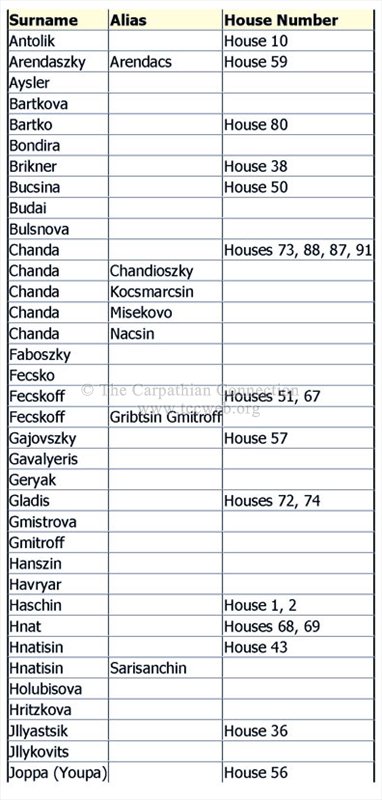
In 1877, the school council consisted of such Malý Lipník residents as: John Chanda, John Geryak, Peter Gladysh, John Hrytsko, Michael Lashchytskiy (Lasky). And in 1881 the following were admitted to the council: Peter Chanda, John Milkosh, Andrew Varlhola and others. In 1888 the school council for the village was lead by a school and cultural activist Rubin Geiza.
In 1907, in Malý Lipník new school was erected from stone in which taught previously mentioned Avhustyn Stavrovskiy. To the distinguished teachers in the village belonged: Rudolf Vrabel, and Havriyil Mlynarich in the 1930's and later – Michael Zavatsky. From the post WWII teachers let's mention Michael Tylishchak, a native son, Stefan Pirosh and Marta Tylishchak. In addition to her teaching work in Malý Lipník, Marta Tylishchak spend a lot of useful time in the development of national art, mainly among its youth. The small circle from Malý Lipník not once distinguished itself in regional competitions, and also at the Svidnyk cultural holiday "Rusyns of Slovakia".
The First World War, just like everywhere else has left its footprint in Malý Lipník. On the front lines 8 young men from Malý Lipník have fallen. Many returned home as invalids. Some were drafted by the Russians and also returned to their native village. The Second World War did not fare better for the inhabitants. After an assault by the partisans on a German column the villagers were persecuted and finally forced/deported from the village. In the 1930's Fedor Zyma was teaching in Malý Lipník. He besides teaching also attempted to spread cultural conscience - organized a choir, propagated fruit growing and lectured on agrarian-farming themes. It was then that a distinguished artist of the time, Aloiz Nevitskiy, settled in the village, and to whom completion of the iconostas/altar in a newly constructed small tserkva/church is credited. Residents would go on pilgrimages to the neighboring villages of: Staryny, Legnava (known for its middle ages monastery of Byzantine architecture), Sulin, Matysova and Udol.
After the Second World War Malý Lipník received a winery and a suburban school, and then in 1947 a vocational school. It was also in 1947 that 72 families from Malý Lipník chose to leave for Ukraine. Folk songs in the village were cultivated by: Nicholas Chanda, Verona Sestokova and John Sestok.
At the present time a sawmill is functioning in the village, which produces boards from neighboring forests. Otherwise Malý Lipník in post WWII has experienced hectic development, village is well spread, a new bituminous road runs through it, a new school was built, cultural hall, a produce store, a tavern, post office also is functioning. Neighborhood is full of recreational houses and a hunting lounge. School teaching only in Slovak. Since the 1989 revolution English is also taught there. It's taught by Sh. Pirosh. Village has been electrified, and the flow of the mountain stream is well controlled. It flows into Poprad River. Inhabitants work on their farms and also in the industrial plants of the area or distant towns of Slovakia. Some work in the Czech Republic where they migrated after WWII.
During the last census 425 declared themselves to be Greek-Catholics, 47 Roman Catholics, 7 undeclared, to Rusyn nationality acknowledged 3 individuals, to Ukrainian 7, and to the Slovak 468 inhabitants.
Translated by Walter Maksimovich from an article in Narodne Novynky
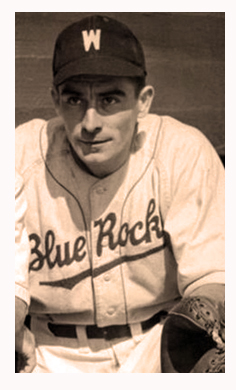
Son of Maly Lipnik immigrants Andrew Antolick and Mary Lukachovsky.
Joe Antolick a native of Hokendauqua, Pennsylvania was 28 years old when he broke into the big leagues in 1944. A catcher for the Philadelphia Blue Jays he made his major league debut on September 20, 1944 in a home game against the Cincinnati Reds at Shibe Park.
Joe was one of many ballplayers who only appeared in the major leagues during World War II.
In four games he was 2-for-6 (.333) with a walk and one run scored. In his three appearances as a catcher he handled 10 chances without making an error and participated in one double play.
Antolick died at the age of 86 in Catasauqua, Pennsylvania.
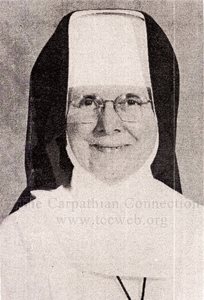
Sister Miriam, was baptized Anna Androsko in Newark, New Jersey. She was one of eleven children born to George Androsko and Mary Haschin (Hashak) a native of Maly Lipnik, Slovakia. Her Apostolate was largely centered around Art-the field in which she excelled with Oil Painting being her outstanding talent. She studied Art in Pittsburgh and taught it in many ways, during her time in the classroom on the Primary and Intermediate levels, as Art Instructress at the Academy and in giving private lessons. She was given an beautiful gift for Eccelesiastical Oil Painting. She was also devoted to Religious Education especially in the instruction of First Communicants and as a Sodality Moderator. Sister Miriam also served as Activity Directress at Macrina Manor and as Consultant to the Laurel Highlands Nursing Home. She attended various workshops and earned many certificates in Education, Religion and Nursing Home Activities. She entered her religious order from St Mary’s Greek Catholic Parish in Wilkes-Barre, Pennsylvania.
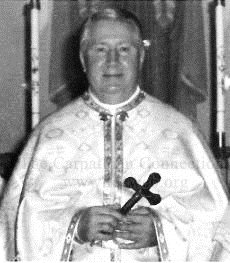
Fr. David Andrew Bachkovsky, (1917-1988) born in Duryea, Luzerne County, Pennsylvania, son of Joseph Bachkovsky native of Štefurov, Slovakia and Maria Kraychik Orechovsky nee Osifchin a native of Maly Lipnik, Slovakia. Father Bachkovsky attended Duryea, Pennsylvania schools and entered the Novitiate of the Order of St. Benedict at St. Procopious Abbey, Lisle, Illinois, making his simple profession of vows in 1952. He graduated from St. Procopius College, Lisle, in 1951 and completed his theological studies at SS. Cyril and Methodius Byzantine Catholic Seminary in Pittsburgh, Pennslyvania. He was ordained to the priesthood on May 29, 1955 by Most Rev. Nicholas T. Elko, D.D., apostolic administrator of the Pittsburgh Greek Rite Diocese. Father Bachkovsky celebrated his first solemn mass in St. Michael's Byzantine Catholic Church in Pittston, Pennsylvania. He was assisted by Rev. Michael Warady, pastor of St. Michael's and by his brother Rev. Sergius Bachkovsky, O.S.B. The Ruthenian sermon was delivered by Very REv. Theodore Siganak, superior of Holy Trinity Monastery, Pittsburgh, where Father Bachkovsky was stationed. Rev. Michael J. Dudick, pastor of St. Nicholas Byzantine Catholic Church in Old Forge, Pennsylvania delivered the English sermon. Father Bachkovsky received his Masters Degree in Catholic Social Philosophy from Dusquesne University in Pittsburgh. Prior to his assignment in 1955 as parish priest of St. Mary's Byzantine Catholic Church in Trauger, West Moreland County, Pennsylvania, he served as pastor at St. Nicholas Byzantine Catholic Church in Fords, New Jersey; St. Pius Byzantine Catholic Church, Pittsburgh; and St. Nicholas Byzantine Catholic Church, Detroit, Michigan. Along with his brother Sergius Stephen their cousins Julia Minarik and Nicholas Youpa also served in religious orders. Father Bachkovsky died on October 24, 1988 in Uniontown Hospital, Uniontown, Pennsylvania. A Requiem of Divine Liturgy was concelebrated in St. Mary's Byzantine Catholic Church, Trauger with Metropolitan Archbishop Stephen J. Kocisko, D.D. as principal celebrant. He was interred in SS. Peter and Paul Cemetery in Duryea, Pennsylvania.
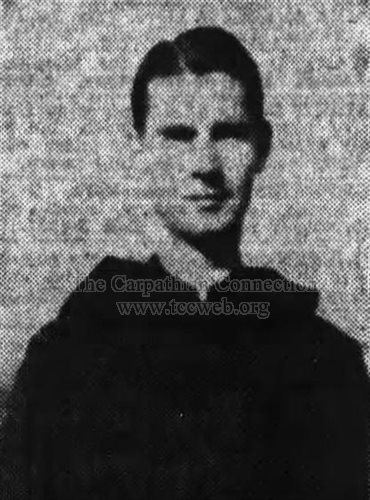
Very Reverend Sergius Stephen Bachkovsky, O.S.B, (1920-1984) born in Duryea, Luzerne County, Pennsylvania, son of Joseph Bachkovsky native of Štefurov (Giraltovce), Slovakia and Maria Kraychik Orechovsky nee Osifchin a native of Maly Lipnik, Slovakia. He graduated from Duryea High School, University of Scranton and Pennsylvania State College. He completed his seminarian studies at St. Procopius Abbey in Lisle, Illinois. On June 29, 1947 he was ordained a Benedictine priest at St. Nicholas Greek Catholic Church, Pittston, Pennsylvania, by His Excellency Bishop Daniel Ivancho, D.D. On July 20th on the anniversary of his mother's death he celebrated his first mass in St. Nicholas Greek Catholic Church, Pittston, Pennsylvania. Father Sergius served as Prior of the Holy Trinity Byzantine Catholic Benedictine Monastery in Butler, Pennsylvania. Father Sergius oversaw 10 Fathers, 5 Brothers and 1 Oblate. Along with his brother David Andrew their cousins Julia Minarik and Nicholas Youpa also served in religious orders.
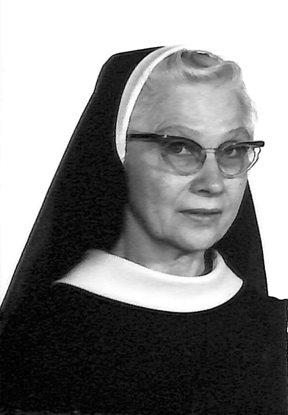
Sister Mary Josephita Gladis (1908-1996)
Photo Courtesy of the archivist for the Ursuline Sisters of Louisville, Kentucky.
Sister Mary Josephita was born in Pennsylvania to Joseph Gladis (son of Stefan & Suzanna Joppa Gladis; grandson of Stefan and Anna Osifchin Joppa) of Maly Lipnik and Helen Miscik. She was raised in Sabraton, West Virginia. Sister Mary Josephita made her first profession of vows on August 24 1932 and her final vows on August 24, 1935. She was a member of the Ursuline Sisters for 66 years. She was former principal of St. Anthony Catholic School and had taught at St. Vincent de Paul, St. Therese, St. Boniface, St. Raphael, Holy Trinity, Our Lady of Lourdes and Ursuline-Pitt schools; Ursuline and Sacred Heart academies; and at other elementary and secondary schools in Indiana, Maryland, Nebraska, Pennsylvania and West Virginia. She died at Marian Home Ursuline Sisters in Louisville, Kentucky.
Sister Mary Josephita's 1955 Thesis submitted to the Faculty of the Graduate School of the Creighton University in Partial Fulfillment of the Requirements for the Degree of Master of Arts in the Department of Latin.
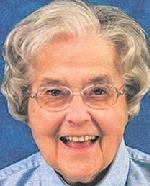
Sister Mary Caroline was born in Buffalo, New York to John Hriczko and Caroline Hriczko nee Chanda. Her parents were immigrants from the village of Maly Lipnik, Slovakia.
Sister Mary Caroline graduated from East High School, Buffalo in 1948, and then went on to graduate from Sisters Hospital School of Nursing, Buffalo in 1952. She joined the Community of Daughters of Charity of St. Vincent de Paul on September 8, 1953. She earned her B.S. degree in nursing from St. Joseph College, Emmitsburg, Md. in 1958 and her M.S.N.C.H.N. specialty in gerontology at Boston University, Boston, Mass. in 1976.
Early in her ministry, Sister Mary Caroline served at Seton Psychiatric Ins., Baltimore, Md. Sister Mary Caroline then served at Providence Hospital, Washington, D.C.; Seton Hospital, Waterville, Maine; Laboure Center, Boston; St. John of God Hospital, Brighton, Mass.; Nazareth Child Care, Boston; Lourdes Hospital, Binghamton, N.Y.; Sisters Hospital, Buffalo; a second time at St. John of God Hospital, Brighton; and a second time at Sisters Hospital, Buffalo. In January, 2003, Sister joined the Ministry of Prayer at St. Louise House and served there until the time of her death.
Sister 'Mary Augustine' Helene Hnatt (1933-1995)
Sister Mary Augustine was born in Mystic, Connecticut and baptized Helene Hnatt. She was the daughter of the late John Hnatt a native from the village of Maly Lipnik, Slovakia and Ann (Kanuch/Kayuk) Hnatt. Helene entered into the Sisters of Mercy on June 27, 1933. She has professed her final vows on January 2, 1941. She earned a B.S. degree from St. Joseph College, West Hartford, Connecticut. Sister Mary Augustine taught at the following schools; St. Joseph, Hartford; St. Mary, Norwich; St. Mary, East Hartford; St. Lawrence O'Toole, Hartford; St. Mary Home, West Hartford; St. Joseph, Danbury; St. John, Middletown; St. Francis, New Haven; St. Mary, New Britain; St. James, Manchester; St. Mary, Portland; St. Francis, Naugatuck; St. Patrick, Norwich; Cathedral of St. Joseph, Hartford; Assumption, Ansonia; St. Peter, Danbury; St. Michael, Pawcatuck; Mount St. Joseph Academy, West Hartford; St. Mary, Middletown; Mercy High School, Middletown. Sister retired to Mercyknoll in July 1986. She passed away at Mercyknoll Infirmary in West Hartford, Connecticut November 7, 1995.
Sister Mary Augustine was predeceased by her parents and sister Luciana Hnatt.
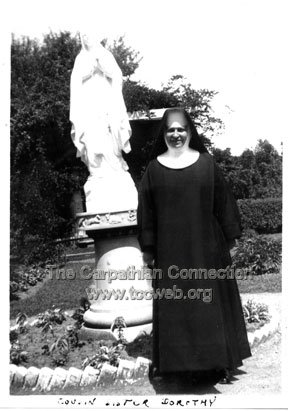
Sister 'Dorothea' Mary Lastick, (1895-1962)
Sister Dorothea was born in Buffalo, New York. She was the daughter of John and Mary Lastick, immigrants from the village of Maly Lipnik, Slovakia. She entered the Benedictine Sisters of Elizabeth, New Jersey in 1912; received her habit in 1913; took her first vows in 1914 and her perpetual vows in 1917. Sister Dorothea received a four year college education and served as a teacher at the Bender Memorial Academy in Elizabeth, New Jersey. At the date of her death she was survived by her brother John and several nieces.
Sister ‘Mary Anthony’ Julia Minarik, (1910-1975) born in Schuylkill County, Pennsylvania the daughter of Slovak born Joseph Minarik and Veronica Youpa a native of Maly Lipnik, Slovakia.
Sister Mary Anthony entered Poor Clare’s Cloistered Monastery in Bordentown, Burlington County, New Jersey on her 21st birthday in 1931, after completing her nurse’s training at Wilson Memorial Hospital, Johnson City, New York.
Following the nursing profession, she served in the monastery’s infirmary for many years. She also served as mistress of novices in the monastery and was a member of the monastery council.
Several of her cousins were also in religious orders, Father David Andrew Bachkovsky, Father Nicholas Youpa, Father Sergius Stephen Bachkovsky, and Sister ‘Mary Theresa’ Kawiecki.
Reverend Stephen Tatar (1905 - 1988)
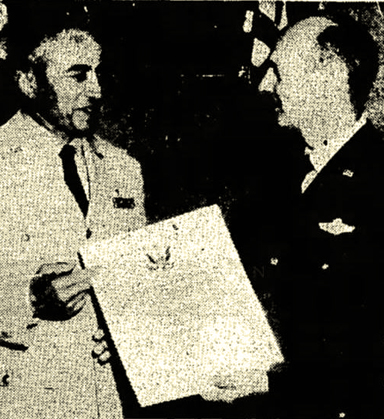
Photo Credit - Lebanon Daily News, 30 May 1958 - Chaplain (Lt. Col.) Tatar on left receiving his retirement certificate from Col. Richard R. Mitchell.
Stephen Tatar was a son of Maly Lipnik born parents, Stephen and Mary (Hancin) Tatar. Born and raised in Lebanon, Pennsylvania, he graduated from local schools, and was a parishioner of Saints Cyril and Methodius Roman Catholic Church in Lebanon. At the age of fourteen, he was employed as a cutter in a local Lebanon, Pennsylvania shoe factory. After graduation from school, he relocated to Buffalo, New York for employment. During his time in Buffalo he made the decision to enter the priesthood. In 1925 he enrolled at St. Joseph's College in Collegeville, Indiana where he studied for six years. Upon graduation in 1931, he studied at Saint Charles Seminary in Carthagenia, Ohio.
Upon completion of his studies he joined the Congregation of the Missionaries of the Most Precious Blood of Our Lord Jesus Christ, (C.PP.S.) He was ordained to the Catholic Priesthood in May of 1937 in Carthagenia, Ohio by the Most Rev. Joseph H. Albers, D.D., Auxiliary Bishop of Cincinnati, Ohio. Father Tatar celebrated his first Solemn High Mass at Saints Cyril and Methodius Roman Catholic Church on 12th and Lehman Streets in Lebanon, Pennsylvania. A sermon in Slovak was given by the Rev. Andrew Pollak, C.PP.S, of Cleveland, Ohio; and an English sermon was delivered by the Rt. Rev. Monsignor Edward J. Rengel, of Olean, New York. Mrs. Clara Allwein was the choir soloist. After the service, approximately two hundred people attended a dinner in Brandywine Hall. During the evening, Father Tatar held a reception for parishioners at the home of his parents at 1223 Church Street in Lebanon.
Reverend Tatar served in parishes in Cleveland, Ohio and Whiting, Indiana, before entering the United States Air Force in 1942. During World War II he was stationed in Trinidad. In 1945 and 1946 he was assigned to McClellan Air Force Base in California. At that time he was incardinated into the Diocese of Sacramento with a view to assignment in Sacramento when the time came for his retirement from active military service.
From 1946 to 1958 Reverend Tatar held the position of deputy staff chaplain in charge of procuring and assigning chaplains of all faiths for the Air Force command. His duties took him on tours throughout Europe and Asia.
In 1958 Rev. Tatar resigned his office of chaplain with the rank of Lieutenant Colonel in the U.S. Air Force. He was assigned as assistant pastor of St. Mel's church in Fair Oaks, California. He received a citation for meritorious service from the Air Force, in which he served for twelve years. In May of 1958 he received his retirement certificate from Col. Richard R. Mitchell, the Deputy Base Commander of Offutt Air Force Base, Nebraska.
In 1962 Father Tatar was ministering as the Catholic Chaplain at the California Medical Facility in Vacaville, a penitentiary where convicts were treated or processed for assignment to prisons to serve out their sentences. He was mentioned in the July 1964 issue of "Catholic Digest" in a story entitled "Painting Toward Freedom." The article involved the artistic pursuits of the prisoners at the Vacaville Penitentiary where in one eight month period five major shows were conducted by prisoner-artists. The article stated in part that Father Tatar steered many prisoners into the study of art. During Father Tatar's time as chaplain prisoner-artists, Victor Heady and Joseph Ullery worked for many weeks producing a huge mural in the Chapel honoring St. Dismas, the penitent thief who died on the cross beside Jesus.
Father Tatar died in Sacramento, California on April 19, 1988. He was interred at Vacaville-Elmira Cemetery in Vacaville, California. At the date of his death he was survived by his brothers: John and George and his sisters: Agnes Shott, Helen Selman and Jenny Spesak; nieces, nephews and cousins. He was predeceased by his parents; sisters: Mary McKinney Barnes and Catherine Smith.
The following article was published Sunday, May 19, 1985 in EASTERN CATHOLIC LIFE
I received a letter from Dr. Gabriel Martyak who is now retired in Florida. The son of the late Fr. Nicholas Martyak, he grew up in Hazelton, Pa. where he and his older brother practiced medicine.
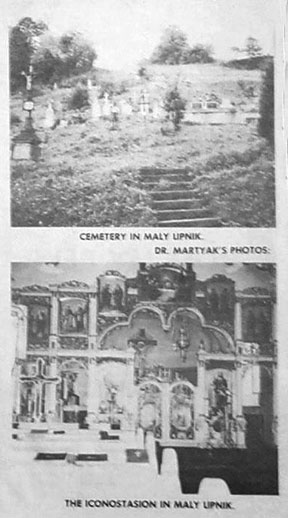
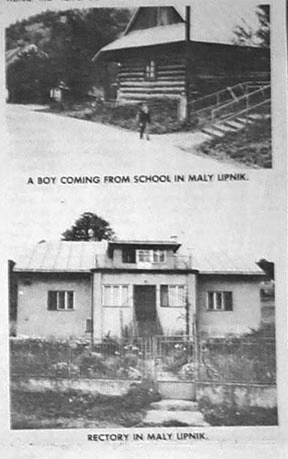
He informs me that last year he visited the old country to look up the, family roots and sent me some pictures from Malý Lipník which I’m using here.
It came to my mind that the old country Eparchial Directory contains the records of parishes, priests and institutions giving a short history on the parishes and a short biography on the priests, so I asked our Chancery Office to send me one. Bishop Michael kindly sent me a Directory of the Presov Eparchy from the year 1909. Here is the short information on Fr. Nicholas Martyak: "Born July 10, 1870 in Vapenik, Sarys County. Ordained to priesthood on September 14, 1902 and appointed Assistant in Sajopetri Hungary. (That time the Hungarian Eparchy didn't exist yet. Sent in 1903 to Lublo-Krempach and on February 24, 1904, Administrator to Malý Lipník. Now in Hazleton, America. Married."
Dr. Gabriel evidently knew that his father's last parish in Europe was in Malý Lipník and he spent some time there and made pictures. I remember him as a young medic and our daughter, Eve, spent two weeks there one summer. She was invited by the doctor’s sister and that time the parishhouse of St. John’s was very lively. Fr. Nicholas was as friendly as he was big. A heavy-set man with a patriarchal countenance. The present Bishop Bilock was his assistant and his widowed daughter, Pani Anna Maczkow, was his housekeeper because he was a widower Her two daughters and their cousin, JoAnn Jackanich, Monsignor’s daughter, were there too and the young people had a swell time. Eve contracted a strep-throat but medical care was at hand. It was an old-fashioned parochial party I fondly remember from my young years and when I came to Elizabeth I had the pleasure to welcome some of those venerable married priests like Fr. Emil Bunk, Fr. Andrejkovich Fr. Keselak, Fr. Medveczky, Fr. Vislocky, Fr. Papp, Fr. Lukach and Fr. Jackovich. These old times of course are now long passed.
Dr. Gabriel mentions his maternal grandfather, Fr. Janiczky that at one time he was a priest in Velky Sulin…in the directory it states that Stephan Janiczky was born February 18, 1852 in Stelbach. Ordained March 22, 1877 and sent to Homrogd in December 25th. In March 5, 1878 to Toriska and in December 13, 1882 to Velky Sulin. He was Dean Consultor. Married. I remember him as a priest in McAdoo, Pa., a really patriarchal personality beloved by everybody. And so was his lovely wife, Pani Janiczky.
REFLECTIONS
Dr. Martyak’s letter and his photos of Malý Lipník renewed my pleasant impressions of that attractive spot on the banks of the Poprad river. I had a few families from Malý Lipník and nearby Matysova and their children keeping contact with the old country. When I lived in Kamjonka in the summer I was exploring that part of our villages and wondering of their past, how did they settle in this restricted terrain not blessed with natural living advantages.
They evidently belonged to the nearest landlords in the feudal era and lived in the valley providing work and military service to the landlords In nearby Plavec whose castle was built on a steep hill the landlord's duty was to defend the borders which he did with his subjects. In St. Lubovna there also was a castle built on a hill, the walls of which in part still stand and the rooms are used as a museum. From here the Kamjonka volley was defended. In Plavec from the old castle only one wall still stands reminding posterity of the harsh old days.
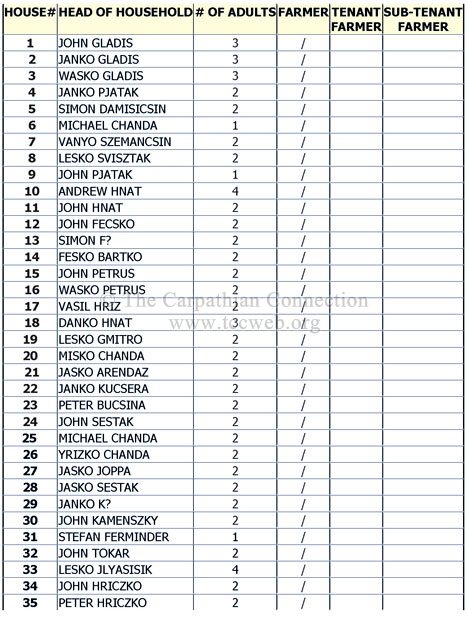
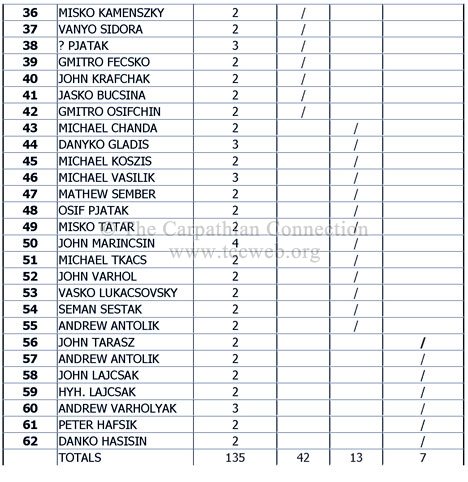
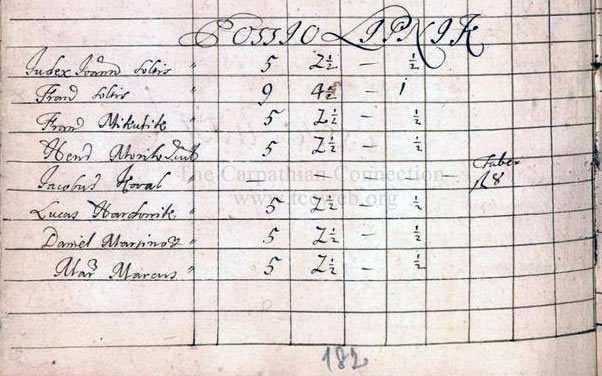
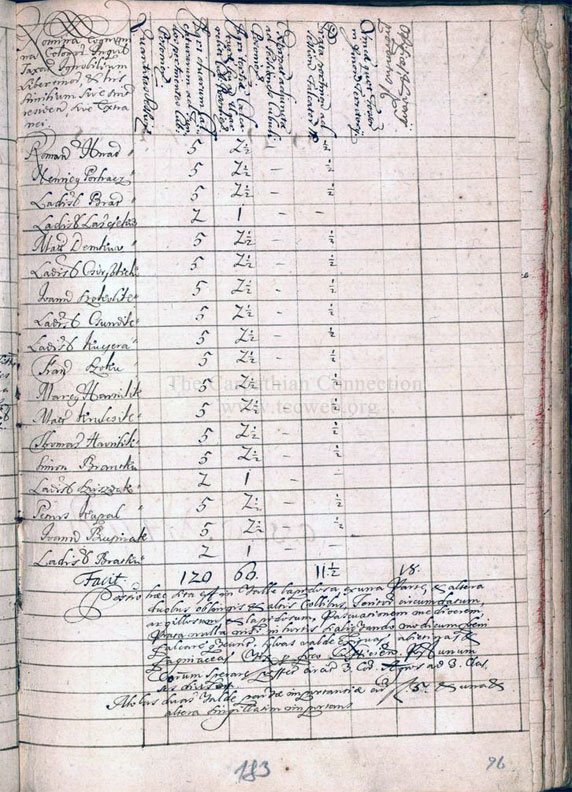
Index : Joannes Soltis; Franciscus Soltis; Franciscus Mikulik; Henricus Morik; Jacobus Koval; Lucas Hardonik; Daniel Marsinov; Martinus Marcus; Romanus Hnad; Henricus Porhacz; Ladislaus Brat; Ladislaus Lascsekuv; Mathias Demkuv; Ladislaus Csirskeh; Joannes Szokolite; Ladislaus Csundik; Ladislaus Kucsera; Franciscus Szoku; Marcus Havrilik; Mathias Krulcsik; Thomas Havrilik; Simon Brantka; Ladislaus Szvisztak; Petrus Kapal; Joannes Bucsinak; Ladislaus Bratka

.jpg)
.jpg)

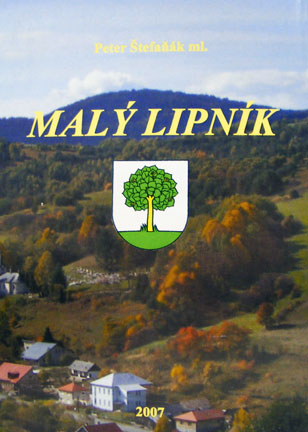
 I received a letter from Dr. Gabriel Martyak who is now retired in Florida. The son of the late Fr. Nicholas Martyak, he grew up in Hazelton, Pa. where he and his older brother practiced medicine.